
 Cable Sizing
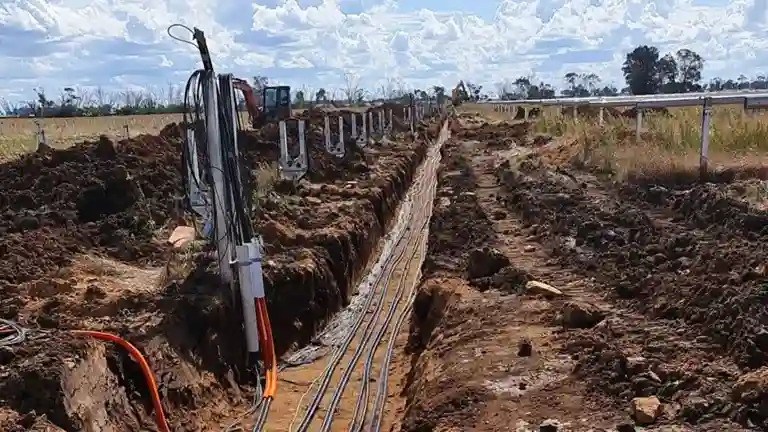
When planning underground electrical installations, selecting an appropriate cable size is necessary to maintain safe operating conditions. Cables must function below their current-carrying limits to prevent excessive heat buildup and reduce the risk of thermal failure.
With that said, this article explains how soil thermal resistivity influences underground cable performance by affecting heat dissipation into the surrounding ground. It also introduces practical tools, such as a cable sizing calculator, wire size calculator, and voltage drop calculator, that can support accurate cable selection during the design process.
It refers to the soil’s ability to resist the flow of electric current. It's influenced by several factors, including soil composition, moisture content and retention, installation depth, the electrical load on the cable, and ambient temperature.
Among these, temperature has the most significant impact on resistivity. For this reason, accurately determining soil thermal resistivity is important before installing underground cables, as it directly affects temperature performance and long-term reliability.
The AS/NZS 3008.1.1:2017 Standard outlines the installation and operating conditions for two types of underground cabling: cables buried directly in the ground and cables installed within underground wiring enclosures. It provides guidance that can be applied effectively using a cable sizing calculator.
According to the Standard, the current-carrying capacities are dependent on the following factors:
According to the Standard, the current-carrying capacities are dependent on the following:
Soil thermal resistivity influences the current-carrying capacity of cables installed in underground wiring enclosures. The AS/NZS 3008 Standard adopts a default value of 1.2 °C·m/W, representing an average based on various soil types and conditions expected during peak loading.
In practice, however, soil thermal resistivity can vary widely due to factors such as soil composition, moisture content, ambient temperature, and installation depth. For this reason, it's important to assess the thermal resistivity along the proposed cable route. The measured values should then be used with the rating factors in Table 29 of the AS/NZS 3008 Standard to ensure accurate cable sizing and safe long-term operation.
The AS/NZS 3008 Standard outlines detailed installation and operating conditions that should be followed when determining the current carrying capacity of underground cables. By accounting for soil thermal resistivity, ambient soil temperature, and laying depth, professionals can design systems that support safe and efficient cable performance.
Moreover, calculating the appropriate cable size for underground installations can be complex. However, tools like CableHero’s online cable size calculator make the process more manageable. Engineers and electricians can sign up for a free trial to explore the tool’s capabilities.
In addition to the cable sizing calculator, CableHero offers voltage drop calculators, wire size calculators, solar cable size calculators, and a conduit size calculator to support various aspects of electrical design. Try CableHero today and register for a free trial!
Disclaimer: While CableHero aims to provide accurate and helpful information on this website, it does not guarantee the completeness, accuracy, reliability, or timeliness of the content. Users are advised to exercise their own judgment, as CableHero assumes no liability for any outcomes from using the information provided.
If you want to know more about soil thermal resistivity and how to size cables, check out these details:
Calculate cable size by determining the required current-carrying capacity based on the load and applying correction factors for installation conditions. Then select a cable with a cross-sectional area that meets or exceeds this adjusted current rating.
Using an incorrectly sized cable can lead to overheating, voltage drop, and energy losses. Over time, this may result in insulation damage, reduced cable lifespan, and safety hazards such as electrical fires or system failure.
Continue reading more articles on this topic.